Op-Ed: Maintaining Vigilance Against the Resurgence of Japanese Militarism
By Ms He Fen, Chargé d’Affaires a.i. of the Chinese Embassy in the Maldives
Recently, China announced the implementation of strict controls on dual-use exports to Japan, prohibiting the export of items intended for Japan’s military users, military purposes, or any end-use that could potentially enhance Japan’s military capabilities. This measure is fully justified, reasonable, and lawful, aimed at safeguarding national security, protecting national interests, and fulfilling China’s international non-proliferation obligations.
In early November, Japanese leaders publicly stated in the Diet that a so-called “Taiwan contingency” could constitute a “survival-threatening situation” allowing Japan to exercise collective self-defense. This represents the first time that Japan has openly expressed ambitions to intervene militarily in the Taiwan question, sending a naked threat of force to China, in blatant violation of the One-China principle. The nature and impact of this statement are extremely serious. In late December, senior officials of the Japanese Prime Minister’s Office publicly suggested that Japan should possess nuclear weapons, triggering widespread concern both domestically and internationally. Such remarks openly serve to revive militarism, challenge the postwar international order and the nuclear non-proliferation regime, and pose a grave threat to regional and global peace.
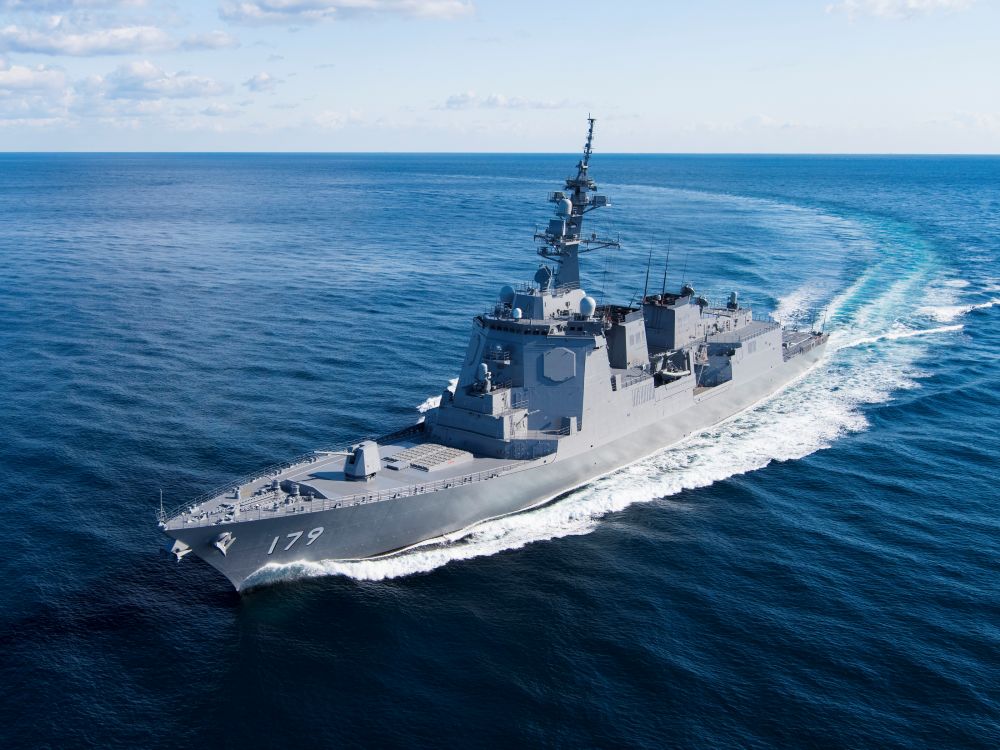
Japanese militarism has long been the driving force behind Japan’s external aggression and expansion, and it continues to serve as the historical foundation for postwar right-wing forces. After the end of World War II, Japan never conducted a thorough reckoning with militarism. Dangerous ideologies have continued to emerge within both official and societal circles, gradually becoming institutionalized through policies and practices, ultimately evolving into so-called “new militarism” cloaked in the guise of a “peaceful nation”. In recent years, Japan has increased its defense budget for thirteen consecutive years, unilaterally relaxed restrictions on collective self-defense, repeatedly loosened controls on arms exports, promoted the so-called development of “counterstrike capabilities,” and even attempted to revise the Three Non-Nuclear Principles. These actions have progressively undermined postwar international documents restricting Japan, flagrantly deviating from constitutional commitments to peaceful development. At the same time, Japan has persistently promoted historical revisionism, altering textbooks to deny or whitewash its war of aggression. The so-called “new militarism” is no longer an undercurrent; it now manifests in concrete policies that threaten the peace and development of Asia and the whole world.
The resurgence of so-called “new militarism” has seriously undermined the stability of China-Japan relations and the foundation of mutual trust. The One-China principle remains an unshakable and universally recognized consensus within the international community. A series of international documents, including the Cairo Declaration, the Potsdam Proclamation, and the Instrument of Surrender, explicitly stipulate that Japan must return Taiwan, which was illegally seized at the time, to China, thereby affirming China’s sovereignty over Taiwan. Japan has also made clear commitments on the Taiwan question in four bilateral political documents with China, including the Joint Communiqué and the Treaty of Peace and Friendship. However, the dangerous words and actions of Japan’s current leadership disregard Japan’s existing commitments and its own international responsibilities, gravely undermining the foundation of China-Japan mutual trust. The Taiwan question is an internal affair of China and lies at the core of China’s core interests. China will never allow any force to challenge the bottom line on the Taiwan question. Any attempt to interfere or pursue secession is doomed to fail and will be met with resolute countermeasures.
The international community must remain highly vigilant against the reemergence of Japanese militarism. Right-wing forces in Japan are transforming this historical danger into a present-day threat through institutional deregulation, rhetoric manipulation, and military enhancement, which fundamentally constitutes an open challenge to the outcomes of World War II. Allowing this trend to continue would not only severely disrupt regional security architecture but also set a dangerous precedent for other countries to follow, thereby undermining the UN-centered international system. History has repeatedly proven that militarism produces nothing but endless conflict and disaster. Asian countries have already paid a heavy price for Japanese militarism, and the international community bears the shared responsibility to uphold this non-negotiable bottom line.
History cannot be falsified, justice cannot be bargained away, and peace cannot be tested. As an important country in the Indian Ocean region, the Maldives has long advocated peaceful coexistence, respect for sovereignty, and multilateralism, positions that are highly consistent with the core principles of the postwar international order. In the current complex and evolving international landscape, China is willing to work together with the Maldives and the wider international community to jointly oppose any resurgence of militarism, firmly defend the UN-centered international system, and safeguard the hard-won peace and justice.

Advertisement