Reducing US Dollar dependence requires phased 10 year approach: President Dr. Muizzu
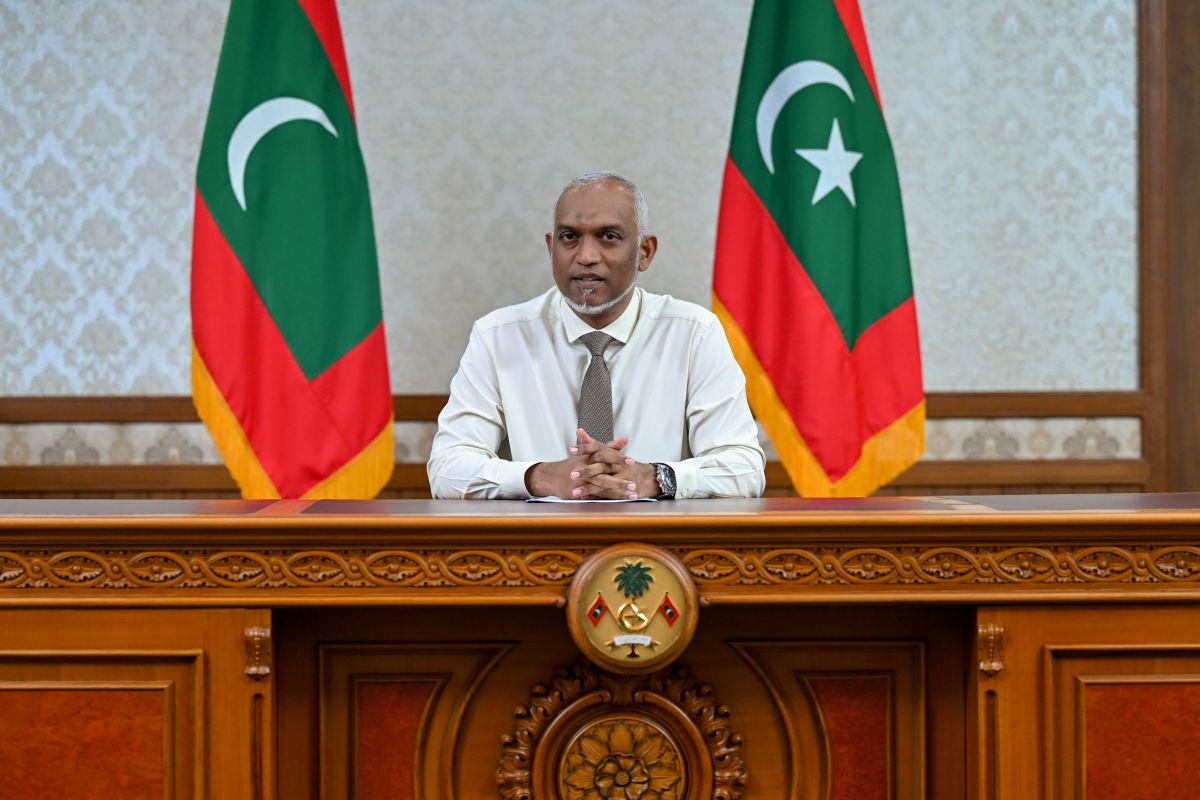
President Dr. Mohamed Muizzu has said the Maldives' transition toward a financial system centered primarily on the Maldivian Rufiyaa could take approximately 10 years and must be carried out gradually.
Speaking about the country's economic outlook, President Dr. Muizzu said reducing the Maldives' heavy reliance on foreign currencies requires a carefully structured and phased approach.
He noted that establishing a stronger Rufiyaa-based domestic financial system has been an objective shared by successive governments.
However, he said the process involves complex economic and financial considerations and cannot be completed rapidly.
The President explained that the country's financial system is closely connected to foreign investments, international borrowing, and other existing financial obligations.
These factors require authorities to carefully assess the potential impact of major changes to the country's monetary framework.
The Maldives currently operates with widespread use of foreign currencies, particularly the US dollar, across various sectors of the domestic economy.
President Dr. Muizzu said the country's current system differs from the approach used in many other countries, where domestic transactions are primarily conducted in the national currency and foreign exchange is generally converted through official financial channels.
He said the extensive circulation of foreign currency within the Maldivian economy makes the transition toward a Rufiyaa-centered system particularly complex.
The Government intends to introduce reforms gradually while assessing priorities across different sectors and coordinating with relevant financial institutions.
The long-term objective is to reduce dependence on foreign currency, strengthen the role of the Maldivian Rufiyaa in domestic transactions, and build a more resilient financial system.
President Dr. Muizzu said a phased approach would be necessary to avoid unnecessary economic disruption while managing the country's international financial commitments and maintaining overall economic stability.

Advertisement