Maldives moves to build strategic fuel reserve amid global uncertainty
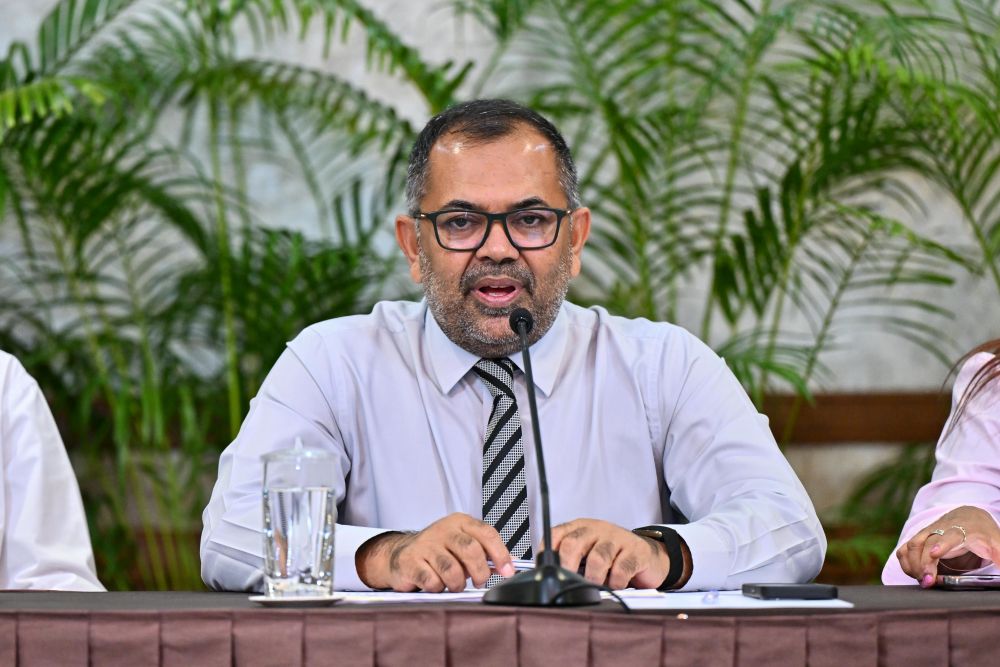
The government has begun assessing potential locations in the Greater Malé region as part of plans to establish a long-term national fuel reserve, Minister of Finance and Public Enterprises Moosa Zameer has announced.
Speaking at a press briefing held by a crisis committee formed to address global economic uncertainties particularly those stemming from instability in the Middle East Minister Zameer said the initiative is being carried out in collaboration with multiple key institutions.
These include the Ministry of Finance and Public Enterprises, the Ministry of Economic Development, Transport and Trade, and the State Trading Organisation (STO).
He noted that ongoing disruptions in global markets have led to fluctuations in fuel prices and increasing challenges in maintaining stable supply chains.
In response, the government has prioritised the development of a strategic fuel reserve to strengthen national preparedness against such uncertainties.
According to the minister, the project will be implemented in three phases, with current efforts focused on identifying suitable locations.
Two sites in the Greater Malé area are under consideration, and surveys are expected to begin next week.
Minister Zameer said a comprehensive plan covering design proposals, financing options, and feasibility studies will be finalised and submitted to the President, with further progress to follow based on subsequent decisions.
Emphasising the importance of the initiative,
A fuel reserve is essential. As we develop the final plan, we will also determine the volume of stock to be maintained.
He stated
The reserve is intended to store fuel sufficient for up to one year, and the project will be carried out under a five-year timeline.
Phase One is expected to be completed within two years.
Drawing comparisons to countries such as India, which maintain established fuel storage systems, the minister noted that once operational, part of the reserve would be allocated for national use, while surplus capacity could potentially be leased.

Advertisement