Former President Mohamed Nasheed has defended the commercial model behind residency developments, saying landowners contribute land while developers provide capital, with both parties receiving returns when properties are sold.
In a post on X on Tuesday, 17 November, Nasheed said such arrangements should not be understood as developers receiving land for free.
His remarks come amid an intensifying political debate over the government’s proposed Rasmalé development with Abu Dhabi-based Eagle Hills.
Nasheed described an arrangement in which the developer and landowner agree to develop and sell residential property, combining the developer’s financing with the landowner’s contribution.
The comments follow his recent defence of foreign direct investment as a means of expanding economic activity and strengthening national independence.
In a separate post, Nasheed cited Singapore and South Korea as examples of countries that had used foreign investment to grow their economies and strengthen their position in international markets. Maldives Voice reported those remarks on 15 November.
His latest statements build on earlier support for opening the Maldives to residency-related investment.
In October, he also warned against personally targeting Eagle Hills chairman Mohamed Alabbar, saying such attacks could damage the Maldives’ investment interests and affect existing investment from the United Arab Emirates.
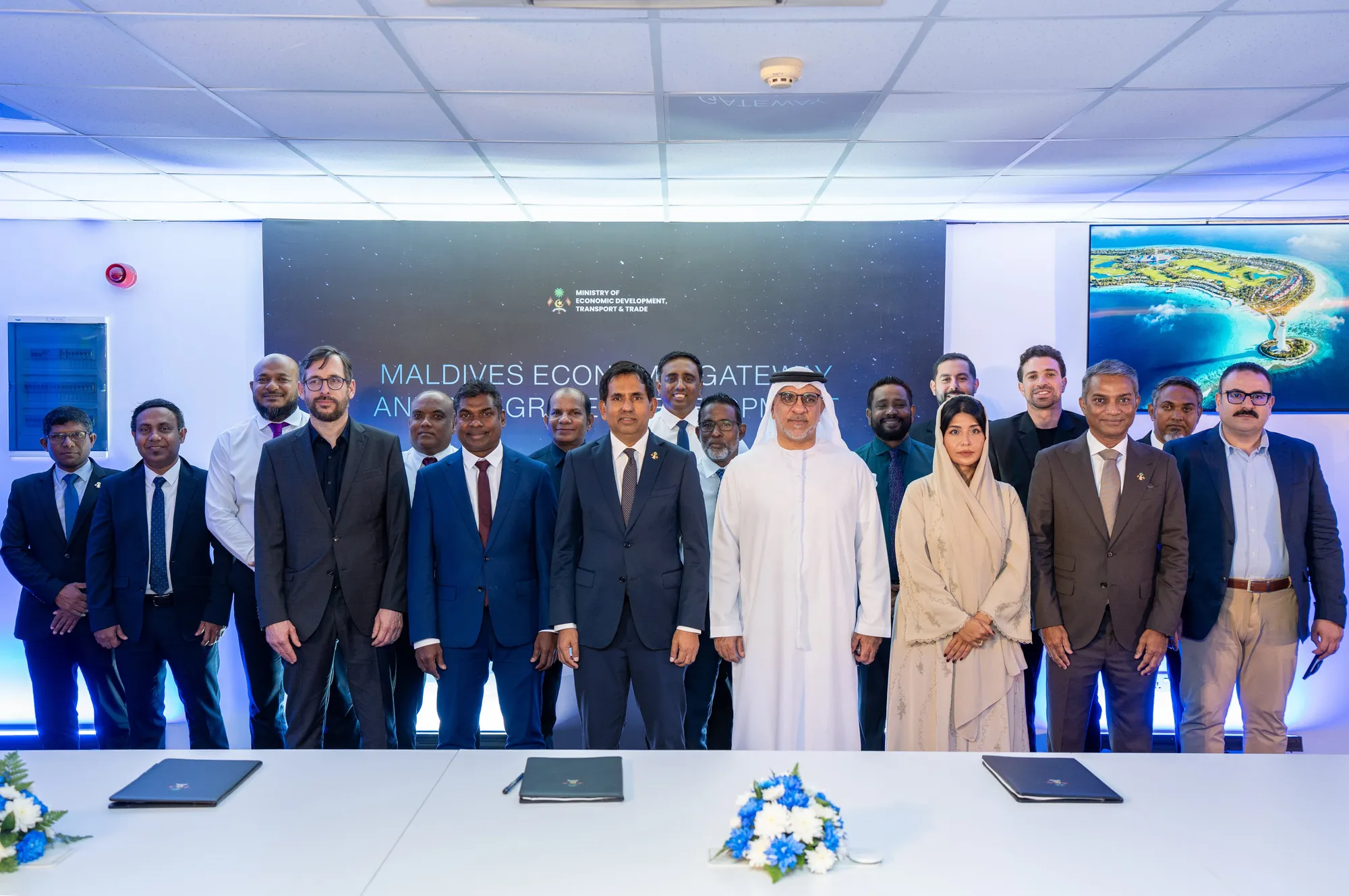
The government and Eagle Hills signed commercial terms for the proposed Maldives Waterfront and Marina development on 21 September.
The planned mixed-use project includes hotels, residences, a marina, retail and dining facilities, alongside community infrastructure.
The proposal has since drawn opposition over transparency, public consultation and its potential implications for sovereignty.
On 13 November, figures from the Maldivian Democratic Party, the People’s National Front and other political groups gathered at Malé’s Artificial Beach under the slogan “Maldivian Land for Maldivians,” calling for the proposed deal to be halted or put to a referendum.
President Dr Mohamed Muizzu has rejected calls for a referendum.
Speaking on 9 November, he said the proposed legal framework would safeguard Maldivians’ rights, national independence and sovereignty, and ensure that the development complies with domestic law.
Leave a comment
Comments
No comments yet. Be the first to comment!